

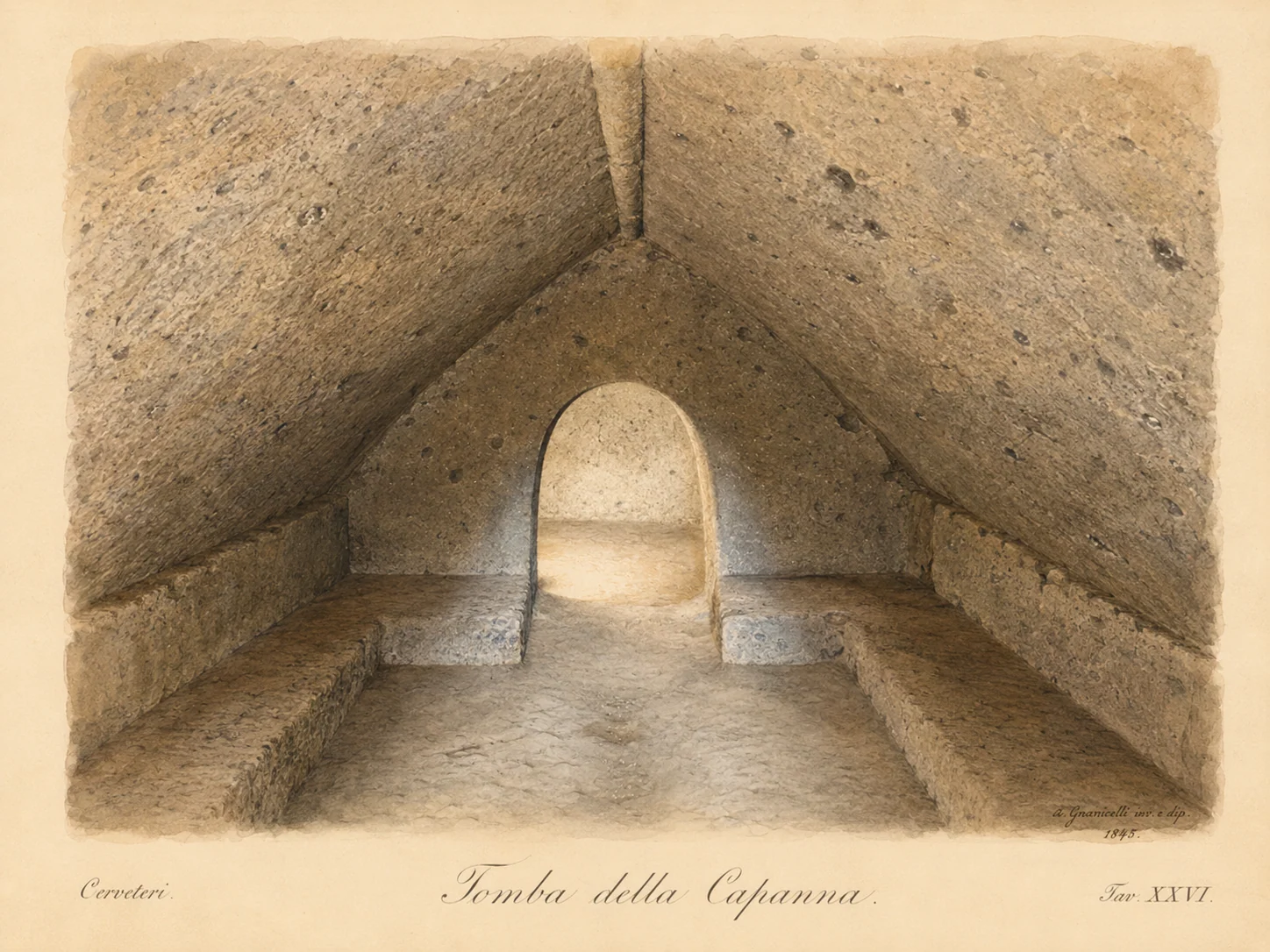
The oldest tomb in the great Tumulus II dates to the late 7th century BC. A long open-air dromos leads to two axial chambers. The first recreates a hut with a pitched roof and carved ridge beam; the smaller second chamber held the deceased on a bed of river pebbles. Architecture here makes the passage from the real house to an “eternal house” tangible.
What to look for
Look up: the ridge beam and roof slopes are carved in stone, yet imitate a timber frame and thatched roof.
Discovery and excavation
It is one of four tombs cut into Tumulus II and the earliest in the complex.