

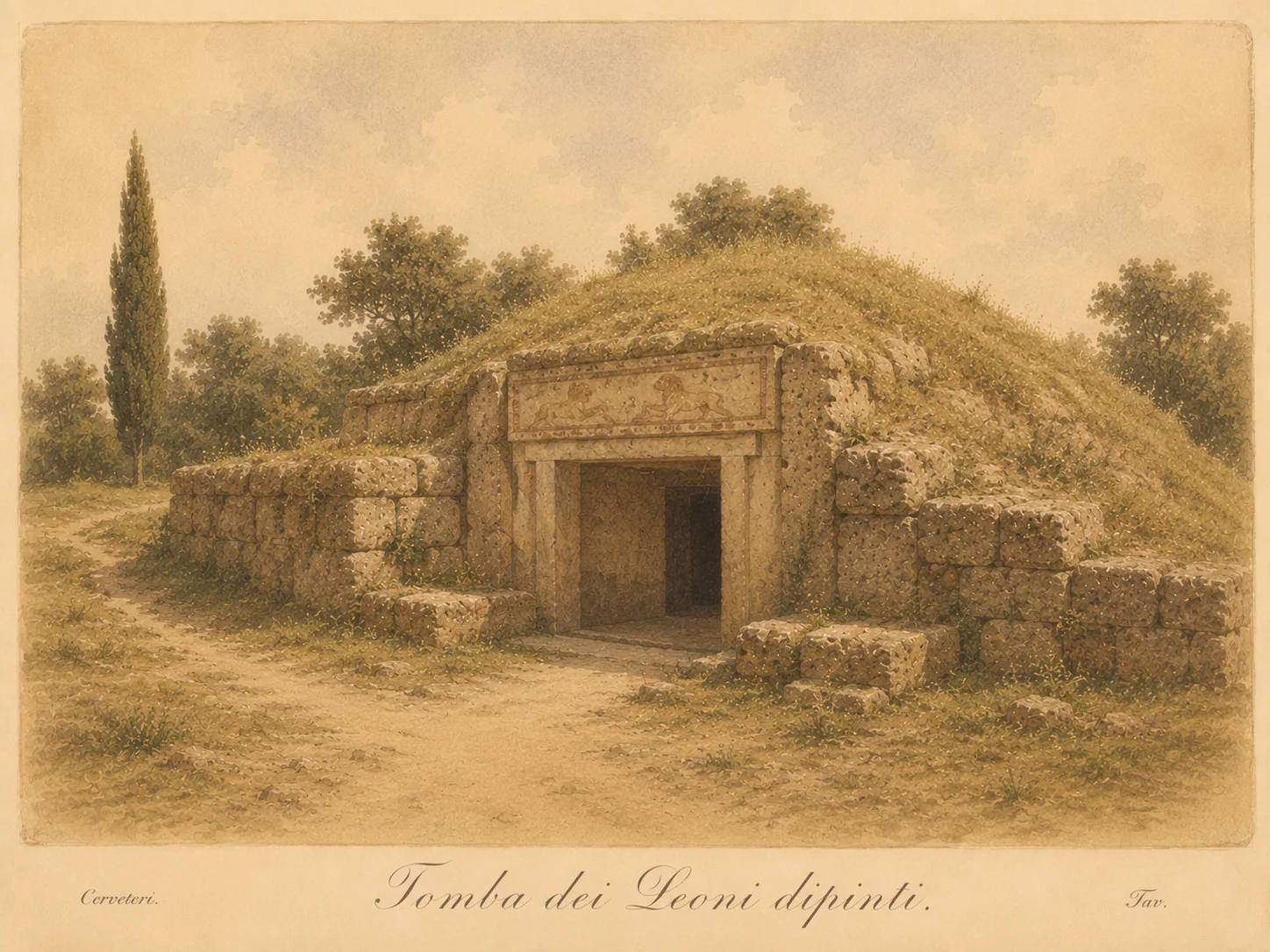
Cut into the great Tumulus of the Shields and Chairs and datable to the late 7th century BC, this is one of Caere's most important examples of Orientalising painting. A corridor about twelve metres long leads to side cells and a vestibule with couches and pillars. The rear tympanum showed the “Master of Animals”, a male figure between two confronting lions, while further lions formed a frieze around the walls. Almost all the colour has vanished because pigments applied directly to tufa without a durable preparation layer were extremely vulnerable.
What to look for
Its story is also a conservation lesson: some paintings are known today through copies and records made when they were more legible.
Discovery and excavation
Its architecture and painted subject are described in the UNESCO dossier; Treccani places the “Master of Animals” in the Orientalising repertoire.