
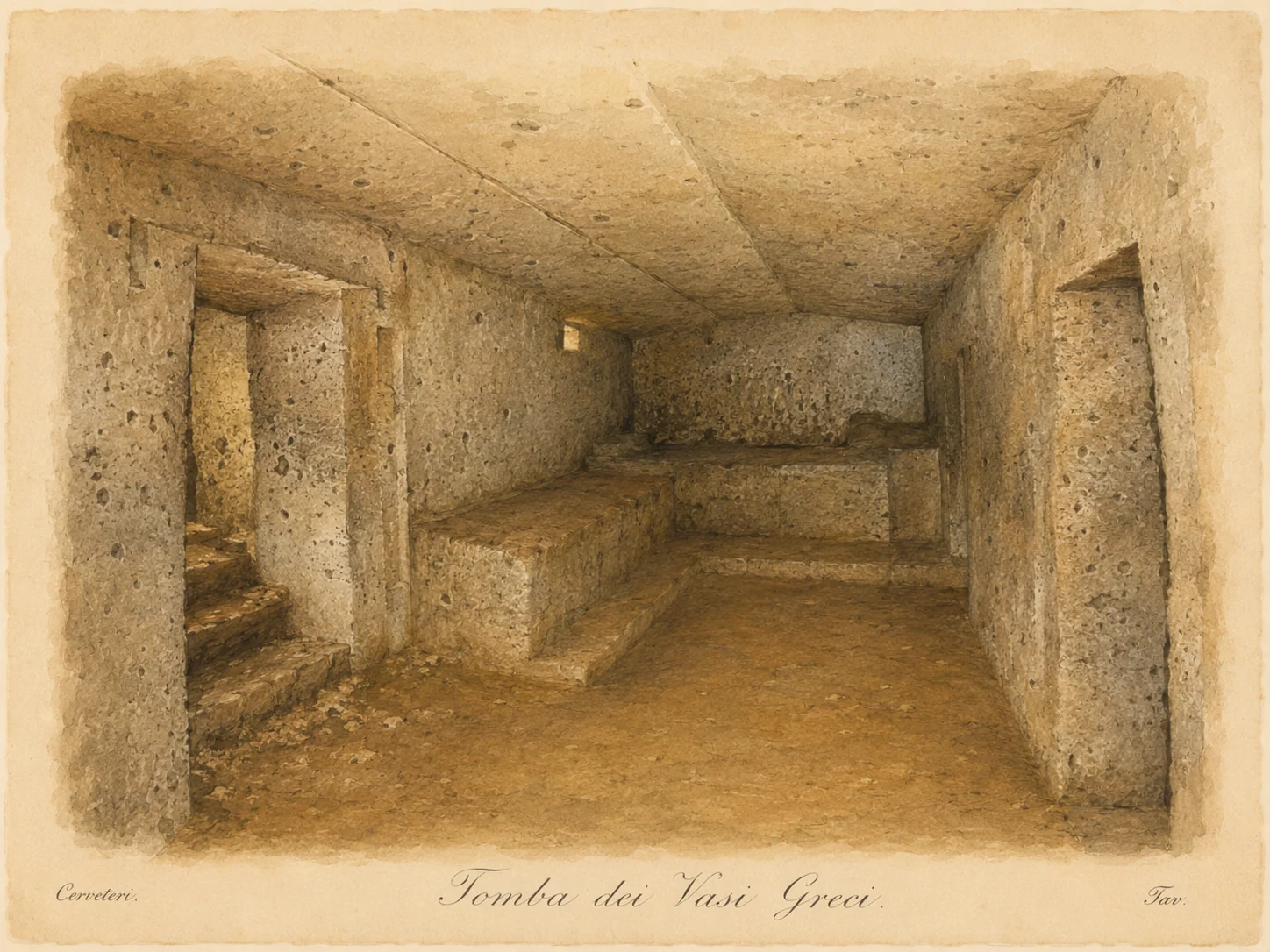
Cut into Tumulus II in the second quarter of the 6th century BC, it has an unusually regular plan: two side cells off the corridor, a broad transverse hall and three rooms at the rear. Although looted and even reused as a sheepfold, it yielded imported Greek pottery. Its modern name therefore preserves evidence of the trade and cultural ties linking powerful Caere with the Mediterranean.
What to look for
Notice the transverse great hall and the three rear doorways: this symmetry sets the tomb apart from the others in the same mound.
Discovery and excavation
Its assemblage of imported Greek pottery gave the tomb its modern name.