

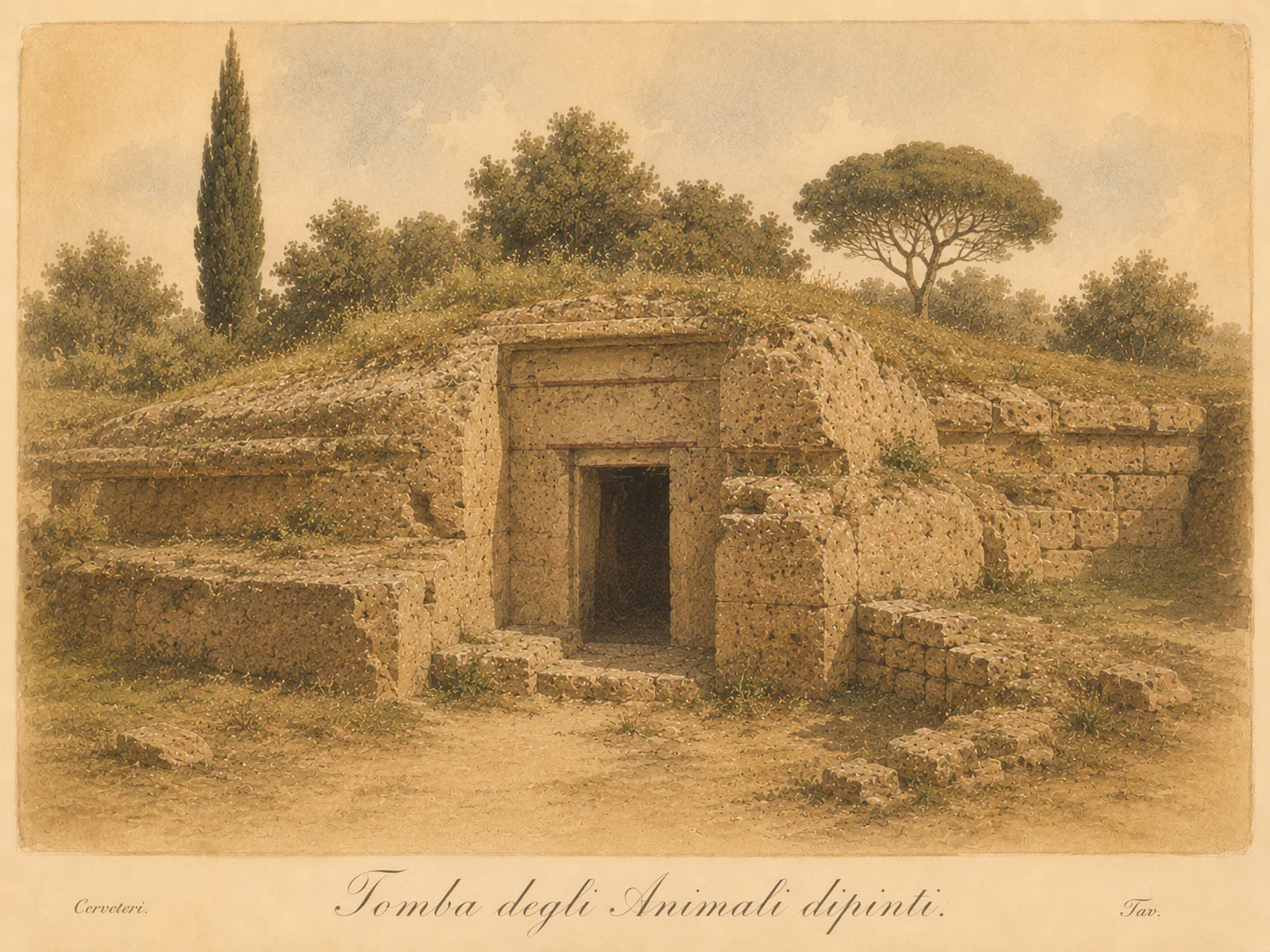
The earliest of the four tombs in its tumulus dates to the second half of the 7th century BC. A long stepped dromos with side cells leads to a circular vestibule once painted with animals in the Orientalising style; beyond is a burial chamber with four pillars, couches and benches beneath a pitched roof with radiating beams. The imagery included real and fantastic animals and hunting scenes, reflecting Caere's dialogue with Greek and Near Eastern models.
What to look for
Do not expect vivid frescoes: the pigments' near disappearance shows why historical drawings and records are crucial for reconstructing Caerean painting.
Discovery and excavation
Its plan and date are documented in the UNESCO dossier; the painted repertoire is discussed by Treccani's Encyclopaedia of Ancient Art.