

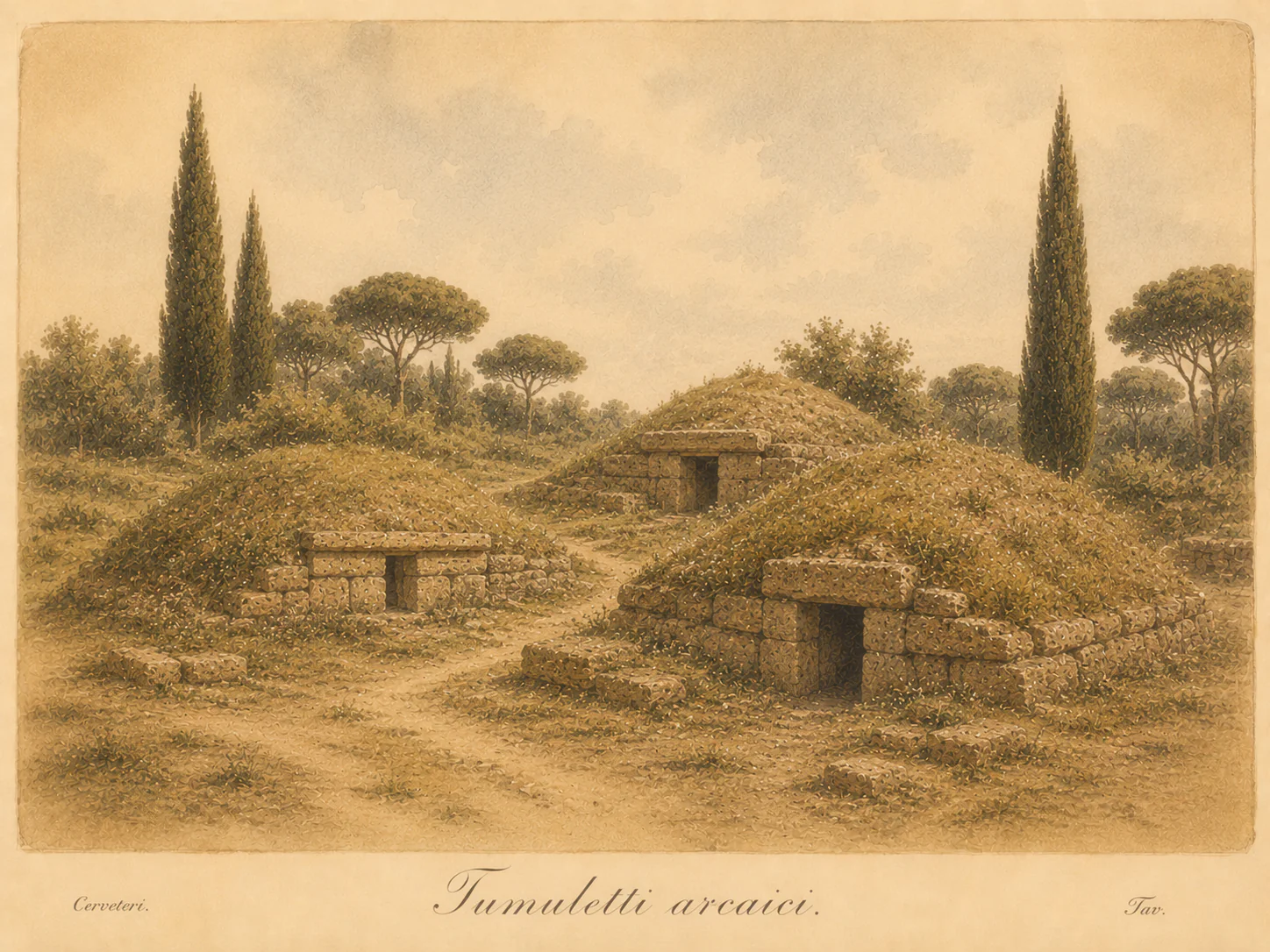
This is not a single tomb but one of the oldest sectors within the monumental enclosure. Archaeologists have identified late Villanovan impasto cinerary urns, trench burials and small mounds, often overlapping or built against one another. This density records the shift from cremation to inhumation and the gradual monumentalisation of burial between the 8th and 7th centuries BC. The overlap is not disorder: it is the material trace of generations returning to bury their dead in the same place.
What to look for
Look at differences in level and scale: here the stratification of the ground tells more than any single monumental façade.
Discovery and excavation
The sector is described by PACT and UNESCO documentation on the earliest burials; its classification has been corrected from “shaft tomb” to “necropolis area”.