
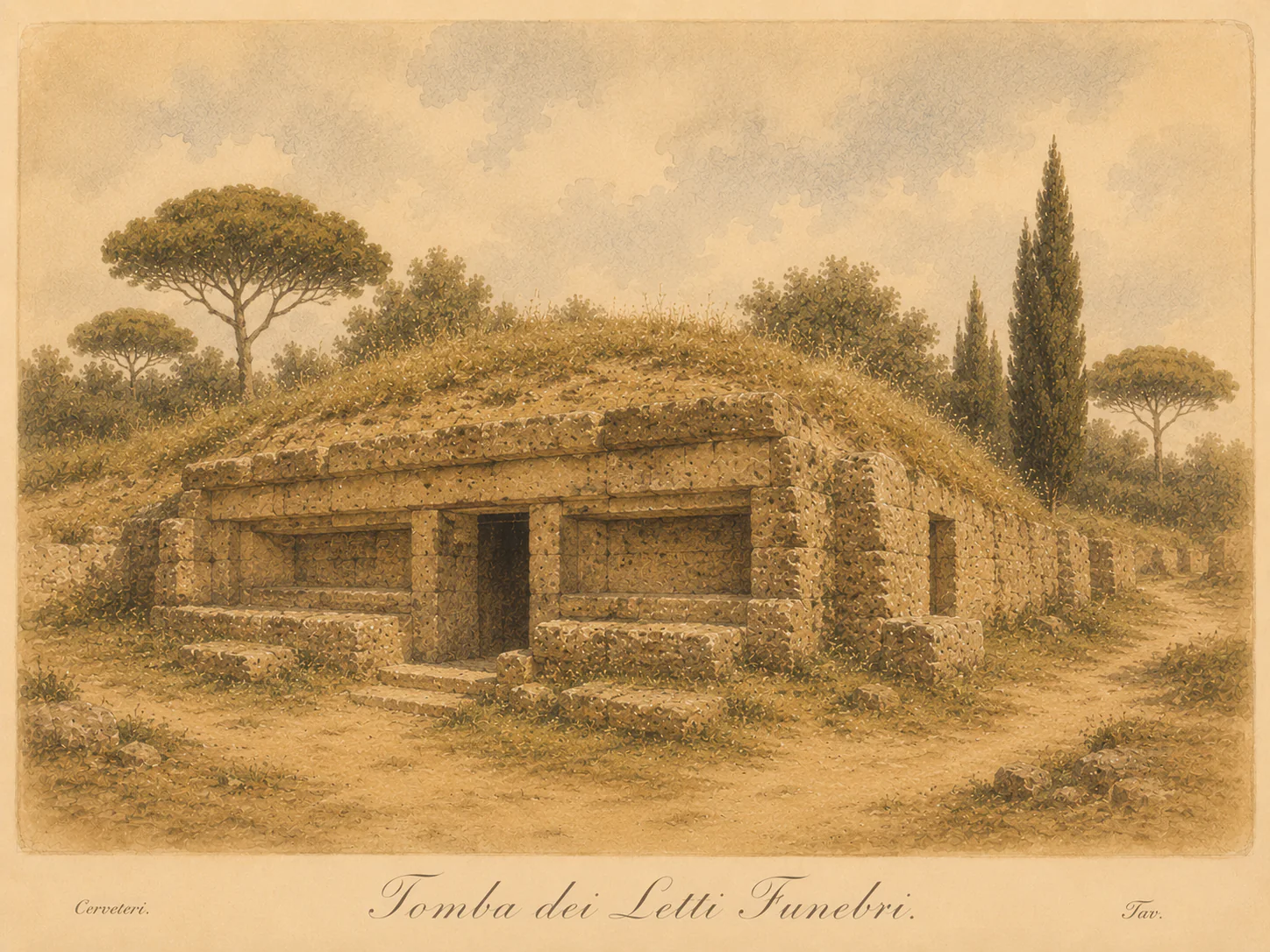
One of the four tombs inside Great Tumulus II, it was used between the late 7th and mid-6th century BC. Two side cells flank the dromos, which leads to a central chamber with funerary couches carved from the tufa; a second, parallel chamber has benches along its sides. These couches are more than surfaces for deposition: they evoke banquet klinai and turn the tomb into a domestic and ceremonial setting where family identity and ancestral memory remained visible.
What to look for
Compare the couches and benches: their different forms show how architecture organised the burials and staged the family group.
Discovery and excavation
Its chronology and arrangement are documented in the UNESCO nomination dossier.