

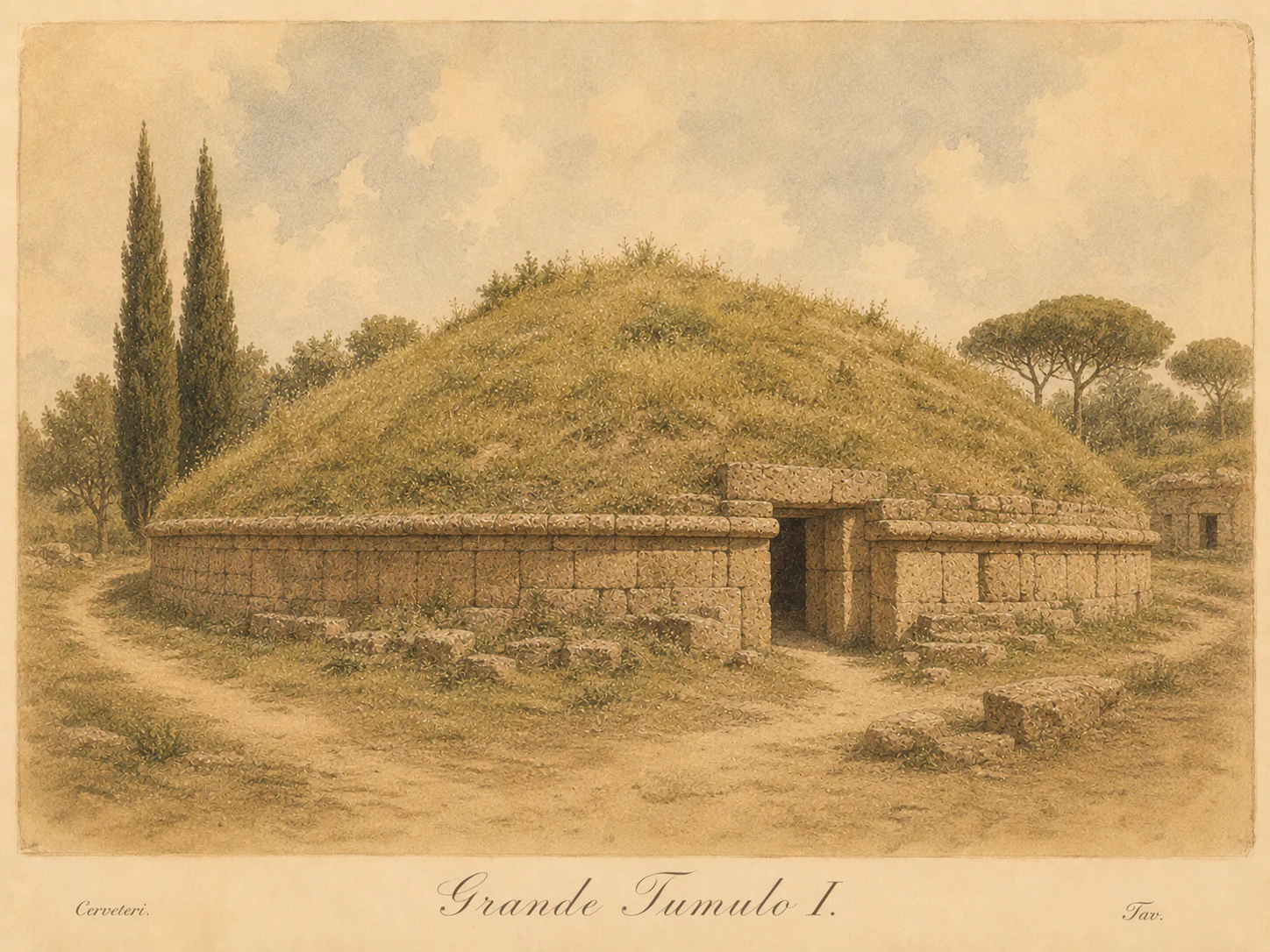
Great Tumulus I belongs to the monumental core in which Caere's elites turned the family burial into a permanent landmark. Its circular drum and earthen mound distinguished an aristocratic group, while chambers cut and built in tufa reproduced elements of domestic architecture. It should be read together with nearby Great Tumulus II: rather than isolated buildings, the great mounds organised routes, squares and sightlines, making the necropolis a true “city of the dead”.
What to look for
Step back to read the volume of the mound and its relationship with the roads: exterior scale conveyed social status as powerfully as the interiors.
Discovery and excavation
The UNESCO dossier places Great Tumuli I and II among the outstanding examples of domestic funerary architecture at Cerveteri.